Annihilation of Caste by Dr Babasaheb Ambedkar: The Undelivered Speech That Became a Manifesto Against Caste

Annihilation of Caste, published in 1936, stands as one of the most powerful and influential works by Dr. Bhimrao Ramji Ambedkar, popularly known as Babasaheb Ambedkar. Originally written as a speech for the annual conference of the Jat-Pat Todak Mandal (Society for the Break-up of Caste) in Lahore, it was never delivered. The organisers found its radical critique of Hindu society and religion too controversial and requested deletions, which Ambedkar refused. He famously declared he would not change even a comma. Consequently, he self-published the text as a pamphlet on 15 May 1936, and it quickly became a manifesto for the anti-caste movement.

This undelivered speech-turned-essay remains essential reading for anyone seeking to understand the deep-rooted structures of inequality in India. With its sharp logic, scholarly depth, and uncompromising demand for genuine social reform, Annihilation of Caste continues to resonate strongly today, especially amid ongoing discussions on caste discrimination, social justice, and constitutional values.

Historical Context and Background

In December 1935, the Jat-Pat Todak Mandal, a reformist Hindu organisation based in Lahore, invited Dr. Ambedkar to preside over its conference and deliver the presidential address on the caste system. Ambedkar prepared a detailed essay and sent the manuscript in advance for printing and distribution.

Upon reviewing the content, the organisers were alarmed. They considered parts of it too harsh toward orthodox Hinduism, potentially inflammatory, and likely to offend conservative sections of society. They asked Ambedkar to remove or soften several passages. Ambedkar stood firm, refusing any compromise on his principles. As a result, the conference itself was cancelled, and he was disinvited.

Read more

Gulamgiri (Slavery) Book Review: Jyotiba Phule’s Fight for Justice

Gulamgiri (Slavery) by Mahatma Jyotiba Phule stands as a revolutionary landmark in the history of Indian social reform literature. Written in 1873, this searing critique of caste discrimination remains one of the boldest indictments of systemic oppression. Phule’s work continues to resonate today, offering an unflinching examination of how religion, mythology, and education were manipulated to legitimise inequality. His commitment to justice, human dignity, and education for all laid the ideological foundations for later anti-caste movements in India.

Gulamgiri (Slavery) Book Review: Jyotiba Phule’s Fight for JusticeThis review explores the context, content, and lasting impact of Gulamgiri (Slavery) while reflecting on its continuing relevance in contemporary society.

Read more

Analysis of India’s Direct Tax Trends: Insights from 2000 to 2024

As the Indian economy has matured over the years, so too has its system of taxation. Direct tax revenues, a crucial component of government finances, have demonstrated remarkable growth over the past two decades. The Income Tax Department’s Time Series Data (2000-2024) offers profound insights into the nation’s economic trajectory, compliance culture, and fiscal health. … Read more

Debt-to-GDP and Fiscal Deficit Analysis: A Comprehensive View of India’s Fiscal Health (FY 2024-25)

Understanding the fiscal health of a country is critical to gauging its economic stability and future growth prospects. For India, a closer look at the Debt-to-GDP ratio and fiscal deficit trends across the central and state governments reveals an intricate web of opportunities and challenges. These two metrics are not just numbers—they are vital indicators of economic resilience, fiscal prudence, and growth potential.

This article delves deeper into the nuances of India’s fiscal data for FY 2024-25, providing an exhaustive analysis of the numbers and their implications for policymakers, businesses, and citizens.

What Do Debt-to-GDP and Fiscal Deficit Mean?

Read more

The Rising Demand for a Caste Census in India

As of October 2024, India is home to over 142 crore people, making it the most populous country in the world. These citizens are distributed across 28 states and 8 Union Territories, each contributing to the country’s incredible diversity. India officially recognises 22 languages under the Eighth Schedule of the Constitution, while more than 1,600 dialects are spoken across villages, towns, and cities. Religiously, too, India remains a vibrant mosaic—according to the 2011 Census of IndiaHindus make up 79.8% of the population, followed by Muslims (14.2%)Christians (2.3%)Sikhs (1.7%)Buddhists (0.7%), and Jains (0.4%).

Yet, beneath this diversity lies one of the oldest and most persistent social frameworks, the caste system. Despite being constitutionally outlawed, caste still plays a powerful role in determining access to resources, representation, and rights. As demands grow for a caste census, many argue that a clearer picture of India’s caste realities is essential to shaping inclusive policies. This article examines the renewed push for a caste census, the limitations of current data, and the arguments both supporting and opposing such an exercise.

Caste Distribution By Religion

Read more

Affirmative Action and Reservation Policies Across the World

Affirmative action and reservation policies aim to address historical and systemic inequalities by providing opportunities for underrepresented or disadvantaged groups. These policies vary widely across countries, shaped by their unique social, historical, and political contexts. This article explores the diverse approaches to affirmative action around the world, highlighting key similarities, differences, and ongoing debates.

Why are Affirmative Action and Reservation Policies Created?

Affirmative action and reservation policies are designed to counteract the lingering effects of past discrimination and to promote a more equitable society. They target underrepresented groups based on race, ethnicity, caste, gender, or other social factors, offering them better access to education, employment, and political representation. Despite their noble intent, these policies are often contentious, sparking debates over fairness, meritocracy, and social cohesion.

Read more

A Comparative Analysis of India’s Union Budgets: 2023-24 vs 2024-25

Studying the Union Budget is crucial for gaining insight into the government’s fiscal strategies and priorities. Comparing the Union Budgets of 2023-24 and 2024-25 unveils significant shifts in central revenue and expenditure allocations, providing a clear indication of the government’s evolving approach to fostering economic stability and growth.

Revenue Sources: A Shift Towards Sustainability

Source 2023-24 (%) 2024-25 (%)
Borrowings and Other Liabilities 34 27
Income Tax 15 19
Goods and Services Tax (GST) 17 18
Corporation Tax 15 17
Non-Tax Revenue 6 9
Union Excise Duties 7 5
Customs 4 4
Non-Debt Capital Receipts 2 1

Read more

10 Most Popular Books by Babasaheb Ambedkar You Must Read

Dr. Bhimrao Ramji Ambedkar, fondly known as Babasaheb Ambedkar, stands as one of the most towering intellectuals, social reformers, and visionaries in modern Indian history. Born into a Mahar family that faced the brutal realities of untouchability, he rose to become the chief architect of the Indian Constitution, a fierce champion of Dalit rights, a scholar of economics and law, and ultimately the leader who guided millions toward Buddhism as a path of dignity and equality.

Ambedkar’s writings were not mere academic exercises. They were powerful weapons aimed at dismantling centuries-old structures of oppression, inequality, and superstition. His books blend rigorous scholarship with passionate advocacy, drawing from history, economics, sociology, religion, and politics. Even decades after his passing in 1956, his works continue to inspire activists, students, policymakers, and readers seeking a more just society.

While popularity can be subjective, measured by readership, citations, Goodreads ratings, reprints, and cultural impact, certain books consistently rise to the top in discussions of Ambedkar’s most influential works. The following list of 10 books captures a broad spectrum of his thought: from early scholarly inquiries into caste and economics to fiery critiques of social hierarchy and his final philosophical masterpiece on Buddhism.

Here is the complete list as widely shared and celebrated:

Read more

Weighing the Pros and Cons of Inheritance Tax in India

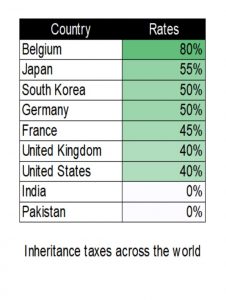
Imagine this: you inherit a sizable sum from a loved one. Joy and gratitude likely wash over you. But in many countries, this inheritance comes with a financial sting – inheritance tax. India, however, stands out as a nation without such a levy. Should this change? Let’s delve into the potential advantages and disadvantages of implementing an inheritance tax system in India, drawing comparisons to how other countries handle this complex issue.

Read more

Computer Age Management Services (CAMS) IPO Analysis

Details
CAMS

  • Dates: 21-23 Sept 2020
  • Issue Size: ₹2,244 Cr
  • Offer for Sale: ₹2,244 Cr (Entire  100% of the issue)
  • Price Band: ₹1229-1230
  • Post issue market capitalisation: ₹ 5,993 Cr – 5,997 Cr
  • Market Lot: 12 Shares amounting to ₹14,760
  • Promoter Holding Pre IPO: 43.50%
  • Promoter Holding Post IPO: 30.98%
  • IPO Listing At BSE

Objectives of the Issue

  • To carry out the Offer for Sale of up to 18,246,600 Equity Shares by the Selling Shareholders
  • Achieve the benefits of listing the Equity Shares

Read more